Tuesday, March 6, 2012

Farewell to Bohol

Today was a day for project visits. Our first stop was to visit the children of Tanday Elementary School in Corella, Bohol. It was wonderful to see all the happy little faces. While at the school, we helped distribute health kits to each student donated by RC Tagbilaran. The kits included wash cloths, tooth brushes and soaps to emphasize cleanliness and good health. AG Louella Bantol of RC Tagbilaran was there to reiterate the importance of good health, specifically washing their hands and bodies, and brushing teeth. We also provided them with stickers on behalf of our rotary district from PA. The gratitude and respect they showed to all of us was amazing for such young children, which as we are told is very common to see within such close families.


We also were able to visit the Holy Trinity Angel's Care Home. The children were all in the playroom when we arrived and were so excited to see us, especially John with his guitar. We sat on the floor and sang songs with them and later on gave them all a sweet treat of M&M's. It was so fun to see them eat them. It was never a thought to lick off all of the candy shell and then eat the chocolate! We had all kinds of colors on us by the time we left. It was great to be able to sit and interact with the children. Before we left we were given a tour of the home. It was so hard to believe that just 2 women care for 5 school children and 14 children that are ages 1-5. The house was nice and the women were very nice and patient with the kids who seemed to be so well behaved for being so young. It was a nice visit.

We enjoyed a little rest and relaxation before leaving our host families and boarding the SuperCat ferry to head back to Cebu City. We would like to express our sincerest appreciation to our host families, The Gran Luis, Pres Peter Emerson Crowther, Rtn. Rose Soy, PN Angie Hoffman, and PP Vic & AG Louella "Baby" Bantol. We greatly appreciate your kindness to us. We would also like to thank the members of RC Tagbilaran. We had an amazing time touring Bohol with you and greatly enjoyed spending time with your club. You are a wonderful group of people and we will never forget you or all that you have done for us.


Monday, March 5, 2012

Fun, Guns & Explosions


We stepped out of our respective vehicles onto the limestone-tinged dirt at the barracks of “Saber Tooth” Second Battalion of the Philippine Army Special Forces. In Bohol, events have tended to start later than the scheduled time, so by 11am we finally arrived and were greeted by the ready Lieutenant Colonel Brawner and his troops. Like many Filipino engagements of which we’ve partaken, the sounds of pop music were in the air–this time the Battalion’s own group played for us songs such as Katie Perry's "California girls" and "I wanna be a millionaire" by Travie McCoy and Bruno Mars.


After a brief presentation of the officers of the Battalion, we enjoyed a “boodle fight” that was prepared for us. A boodle fight is a military style of eating in which a long table has been prepared and food is displayed on top of banana leaves. Participants eat using their bare hands and jugs of water are prepared on the side to wash hands before the "eating combat". The tradition had been modified from one employed at the United States Military Academy at West Point The mayor of the city of Carmen, the Honorable Conchita “Che” Toribio Delos Reyes joined us. We had met her a few evenings earlier at a sporting event.


Soon after dining combat had ended, the band was belting out “I gotta feeling” by the Black-Eyed Peas. The soldiers joined our hosts and us in a dance and soon it was time to take the song's advice and lift our cups, mazel tov. The soldiers broke out shots and shared them with a few team members and fellow troops.


We said our goodbyes to the Lieutenant Colonel and his troops as well as the mayor and headed to the Butterfly Conservatory of Loboc. There, we learned about the stages of metamorphosis and even saw a butterfly unable to reproduce because it is half male and half female. The photogenic butterflies made excellent models for our photography. A brief respite of homemade ice cream was followed by a trip to Bohol Limestone Corporation (BLC), which is partially owned by a Japanese corporation. The President of the corporation is our wonderful host, Victor. At BLC we learned about the mining of limestone. We awaited a blasting operation which showed us the way that limestone is typically removed from the earth. Limestone is a useful mineral; for example, cement consists of about 80 percent limestone.


After the mine tour, we went to the top of the mountain and enjoyed fresh coconut water–nature’s Gatorade. There we also visited the mine’s nursery; the mine has implemented a reforestation experiment and currently is filling the area with hearty pine trees.


The evening ended on a floating restaurant on the river with our gracious hosts. After dinner, we went firefly watching and spotted snoozing egrets in the tall palm trees with a floodlight. Singing and farewells abound as we recognized that this was our last night in Bohol. One more day of activities tomorrow and the coast of Bohol will move farther away from us as we hop the ferry back to Cebu–but the experience gained here with our hosts learning about their land cannot never fade away nor can the friendships that we have formed.

Thoughts from the Team Leader

This blog is appropriately by and for the GSE team members, but once in a while the team leader may weigh in with a few general observations.


Some readers of this blog (okay, just my friend Dale who lives in Montana and has this amazing ability to hitch-hike long distances and make lasting friendships along the way), asked this question: What, if anything, does the team leader get to work on?


It's a good question. There are three team members with specific vocational interests. Nicole is focused on the mental health and healthy eating systems of the Philippines. Stacey's emphasis is on x-ray technology in a clinical setting as well as the business aspects of Filipino healthcare. Melissa's concentration is on the education, especially post-secondary education, available to Filipino students. But what about John? He's a business writer and journalist. Does he get exposed to the publishing industry in the Philippines?


Not quite. The GSE team leader's job is to learn more about Rotary International and to solidify the relationships that will lead to formal and informal Rotary cooperation between Clubs. Rotary is a huge international project. The GSE experience is just one project that gives Rotarians exposure to district and international Rotary experience that the Rotarian will be expected to apply at some future date.


Sunday, March 4, 2012

A Weekend to Relax and Enjoy

Saturday started with a trip to the Danao Adventure Park where we took part in a skyride over a huge ravine then ziplining on the Suislide (note - Nicole was not amused with the play on words here) and ending with caving. All the experiences were gradually more invigorating.


The caving experience included a hike down into a valley to reach the mouth of a cave rediscovered around the 1970's but which had been used for a hideout during WWII. Once we climbed inside, we were faced with terrain requiring not just walking and swimming but, submerging ourselves in water and army crawling through water and rocks, all the while in awe over the amazing crystalized formations, stalagmites, columns, stalagtites, and just the general environment of the cave. It was simply breathtaking (the hike and climbing helped take our breath away too, but for different reasons!). Once inside we were able to swim in the deepest interior while enjoying the amazing creations. We were informed that one Stalagmite/stalagtite takes 100 years to grow one inch. Obviously, this has been a masterpiece in the making.  None of us had done anything like this before, but all hope to experience something similar again.


It was then on to a professional televised boxing match between the Philippines and Mexico with VIP treatment and seating at the CPG Sports Complex in Tagbilaran City. The match featured the famous Filipino boxer, "Boom Boom" Bautista (who has his own theme song). The big event brought out a very large amount of people that showed huge support for their Boholian boxer.  Adults and children were hanging off every available inch of the two big screens used to show the fight to the crowds in the back.  We do not think this would have been allowed stateside.....


An early Sunday morning start took us out on the South China Sea on a Filipino boat for some dolphin watching, where we did get one sighting of a very large school swimming by. The Filipino boats all have large bamboo outriggers that keep them stable as they move and sit docked (the water was a bit rough at times, so we were glad to have those).  Next came some snorkeling at Balicasag Island. Not only did we get to swim with the fish and observe the beautiful corals, we also got to feed the fish out of our hands as they swarmed around us and swim with a sea turtle. The colors and details of the marine life were unbelievable. (Sorry - no pictures of that -- our cameras were not water proof, so you'll just have to trust us on it).


A Day to Learn and A Night to Enjoy the Culture

Our morning began with a little business aspect of the Philippines. We sat down with rotarian Norris Oculam, the regional governor for region VII Philippine Chamber of Commerce and Industry, a leadership that is 60 years old. His region covers Cebu, Bohol, Negros Oriental and Siquijor Provence. They have 4 chambers under them and focus on their main super regions of agriculture, administration, industrial, and service(telecom, tourism, IT, call centers). Cebu has over 50,000 call center workers, many of who, we from the states, have talked to when we needed technical support. The financial breakdown for every peso the government gets in the Philippines 40 cetavos goes towards the debt, 30 centavos goes towards sciences/salary, and 30 centavos goes towards infrastructure. Since th government doesn't get a large sum of money, 725 billion dollars worth of what can be seen throughout the country (roads, bridges, etc) comes from the OPA, Office of Development Assistance, which are basically loans from overseas. The Chamber of Commerce in the Philippines has a strong structure and is also offering a discount card for Filipinos to use to help save some money thru purchases in the province.

The next visit was to Ramiro Community Hospital. It appears that most hospitals in Bohol are limited to general medicine and those that need specialized care need to go to bigger city areas such as Cebu City or Manilla. Ramiro is a hospital that employs about 70-80 nursing staff. Nurses are required to complete nursing school including a 1-2 year clinical. The Philippines is one of the biggest providers of nurses abroad, but the US usually requires a minimum of 2 years prior experience to work there. The downfall with Bohol hospitals is that doctors are hard to come by. Many physicians go to the city to work because of better trainined and better pay. The Ramiro hospital itself can care for 124 in hospital patients, with room rates varying from $20-$40 per day. The hospital is in the process of transfering all information into a computerized system to allow all patient information to be access internally, including digital images. The Ramiro hospital was started 37 years ago and is growing fast already with one new addition to the building adding many inpatient rooms for patients that includes an area for patients to go to overlook the Tagbilaran Bay, which provides a great therapy for patients in healing. We observed some cultural differences to the hospitals that we have seen in our district area. One of those include what they call "wards". These are big rooms that are specified to a particular care where several patients can be treated at one time at a cheaper price, but with no private room. For example, in the pediatric ward, there are 8 beds in one room. Many patients chose this option to help with the financial burdens. The nurses wear the traditional white uniforms with white hats.


We completed our visit with a lunch provided by Mr. and Mrs. Ramiro in their home located at the top floor of the hospital where they reside overlooking the bay. They offered us the kindest hospitality. We greatly enjoyed our visit.


Education in the Philippines is different in some aspects. Most obvious upon first visit to the Philippines is that all students are required to wear uniforms, no matter the level of education. Their schools include grades K-6 and then 4 years of high school. The age upon graduation varies depending on when the students started school. College eduction varies upon concentration, but are generally a 4 year program. University of Bohol and Holy Name University kindly invited us to visit their campuses to speak directly with leaders of the university. We are all able to compare personal education information with them, which was quite nice. Upon leaving Holy Name University we were able to see how their traditional end of school day is for them. It was a very moving moment as you saw every student stop what they were doing and face the flag as the school band played their national anthem and the Philippines flag was lowered. It was amazing to see such appreciation and respect from the students and faculty.


After a busy day learning a great deal about the business, education and health aspects of the Filipino culture in Bohol, we were escorted to relax upon a river night cruise where we enjoyed a dinner aboard a boat on the river and traveled up the river enjoying the beautiful scenes lit by colored lights. Near our turn around point we were given the most beautiful show given by the children of Bohol. They performed vocally, musically and performed some amazing dances, some of which we were able to join in with them and interact with the Filipino children and enjoy their smiling faces.


The Loboc YouthAmbassador Band blew us away with their amazing talents in a show for us after the river ride. The many performances in motion and music all from memory was unbelieveable and the music was beyond enjoyable. The students range from as young as 8 to the age of 18 and travel to other countries to compete and perform. Their next stop in a few months is to China. We have no doubt they will perform great.

Thursday, March 1, 2012

Bohol RC Tagbilaran Welcomes Us

The Rotary Club of Tagbilaran welcomed the GSE team as our ferry from Cebu arrived. District Governor nominee Ed Chiongbian personally escorted us on the highspeed SuperCat ferry. The journey took about 90 minutes.
We arrived in Bohol, the fifth largest of the Philippines Islands about 10:30 am. We look forward to getting to know our new host families, investigating the vocational opportunities set up for us, and exploring the many recreational experiences Bohol is known for,


caption: l to r: Jack Man-on, Louella (Baby) Bantol, Rev. Ruel Gado, SVP (Society of the Divine Word), Wilma Lagumbay, past president Cynthia Pedralba, Alex Bongawan, Marcelino Lagumbay, District Governor Nominee Ed Chiongbian.


The GSE made its presentation later that day at the Rotary Club of Tagbilaran at its regular lunch meeting at the MetroCenter Hotel. We were impressed by the richness of the meeting, including a rousing "Moon River" led by Baby Bantol, some jokes, review of the minutes of the executive committee, and some remarks by Ed Chiongbian.


Our formal presentation is getting smoother and more fluid as we succeed in making in more informal. Our goal is to dispense with the Power Point altogether and just have a conversation. The group especially loved our songs, particularly "Side by Side," which we presented, complete with choreography, later that evening at a welcome dinner at the Grand Luis Lodge where we had a very comfortable evening.


Nicole and Stacey singing "Country Roads" during post-dinner karaoke and dancing.


Note to blog readers: sometimes blog posts appear out of chronological order. We arrived in Tagbilaran on Wednesday, February 29.

The sights and sounds of Bohol

Thursday, March 1:

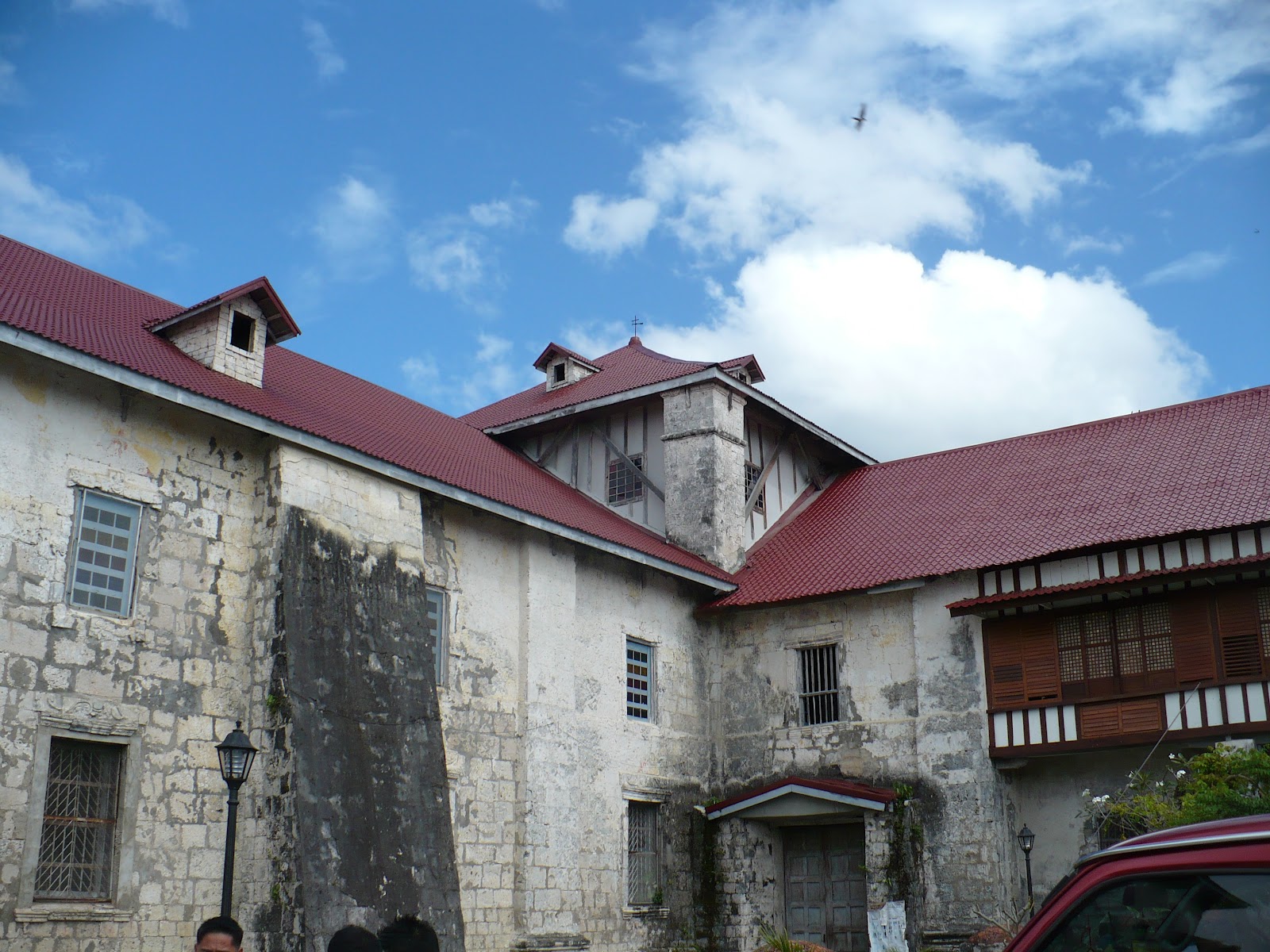
We started the morning off with a beautiful countryside tour with a few stops at the most famous areas in Bohol starting with the location of the Blood Compact. We then continued to the Baclayon Church, which was built in the 1600's of corals. It is the oldest church in Bohol and is still a running church today featuring multiple services for Holy Week and during Christmas. The church, beautiful in itself, houses an organ from 1824 that is still in working order.


Next stop, the infamous tarsier, the worlds smallest monkey. The little ones measure to be smaller than the size of your fist. The mothers time of gestation is six months and the babies measure the size of your thumb when born.


The Chocolate Hills were the next tourist attraction where volcanic activity caused the limestone in the ground to rise up in many areas creating smooth mounds of grassy hills. During summer the grass dries to a brown color creating the look of "Chocolate Hills".


Our non-tourist site visit today was St. Nino High school, a RC Tagbilaran project school, where we met with principal Domingo Cajes. 

Senor Cajes told us the school was started 3 years ago and is one of 10 public schools in Talibon.  In now, in its third year it had 75 students and currently has 286.  Students range in age from 12-20 (it is only 4 years, but children who are behind in their learning may be older when they start and finish). The school serves children as far as 6K away, and because of the distance, many parents would not previously send their children to secondary school (in the Philippines, although both primary and secondary school is open and free to all children, only primary education is compulsory). Some parents also cannot afford to purchase uniforms, shoes, notebooks, etc. that children need to attend school (public school, while tuition-free, does have an inherent cost, which is often too steep for families). I learn that children who do not go to school either stay at home working for the family (on the farm, etc), they marry very early, or they might get work as house help, often in Manila.  However, since St. Nino opened, more parents have been deciding to enroll their children, thereby giving children more opportunities for the future (as high school graduates have more job and training options available).  While this is to be celebrated, in our tour and talk with Senor Cajes and the RC of Tagbilaran, it is clear there is still much to be done.  The school has no books for their children- although the government dictates what is to be taught, and pays teacher salaries from taxes, they do not supply books for the children.  That is left to the school.  And for a poor, rural school, books are a luxury.  Instead, teachers teach from their one book and either photocopy or write out the lessons for children to copy by hand. 

There is no school nurse (parents pay 20 pesos a year to fund basic meds should kids need them), but there is PE class (with equipment donated from Australian Rotary).  Also, prior to the RG Tagbilaran’s involvement, the school had no walls (just a roof and floor) and no CR (bathroom) – children would just answer nature’s call in nature during the school day.  The new CR built by the Rotary is one of the prides of St. Nino.

As the school has grown, so have the structures and there are many separate classrooms now, most donated by NGOs.  Teachers earn 15,000 pesos a month in public school (less in private – which we had to ask twice to confirm we heard correctly) and at an exchange rate of about 44 pesos to the dollar, you can do the math. The school is also a training practicum for student teachers from the local college.  What struck as much as the facts that I have just presented to you, was the look/feel of the students and teachers themselves.  Instead of looking tired or downtrodden by what they were lacking (things we consider basics for education), or the 3+ miles they walked to get there (and face on the walk back) they looked truly happy and eager to be there, learning.  Would American students/teachers seem the same under similar conditions, I wondered?

While I learned so much from this brief visit, it left me saddened that I was not doing more there than just learning.